REPORT SAYS META MAY BREAK FROM ITS OPEN-SOURCE STRATEGY AS COMPETITION WITH OPENAI AND GOOGLE INTENSIFIES
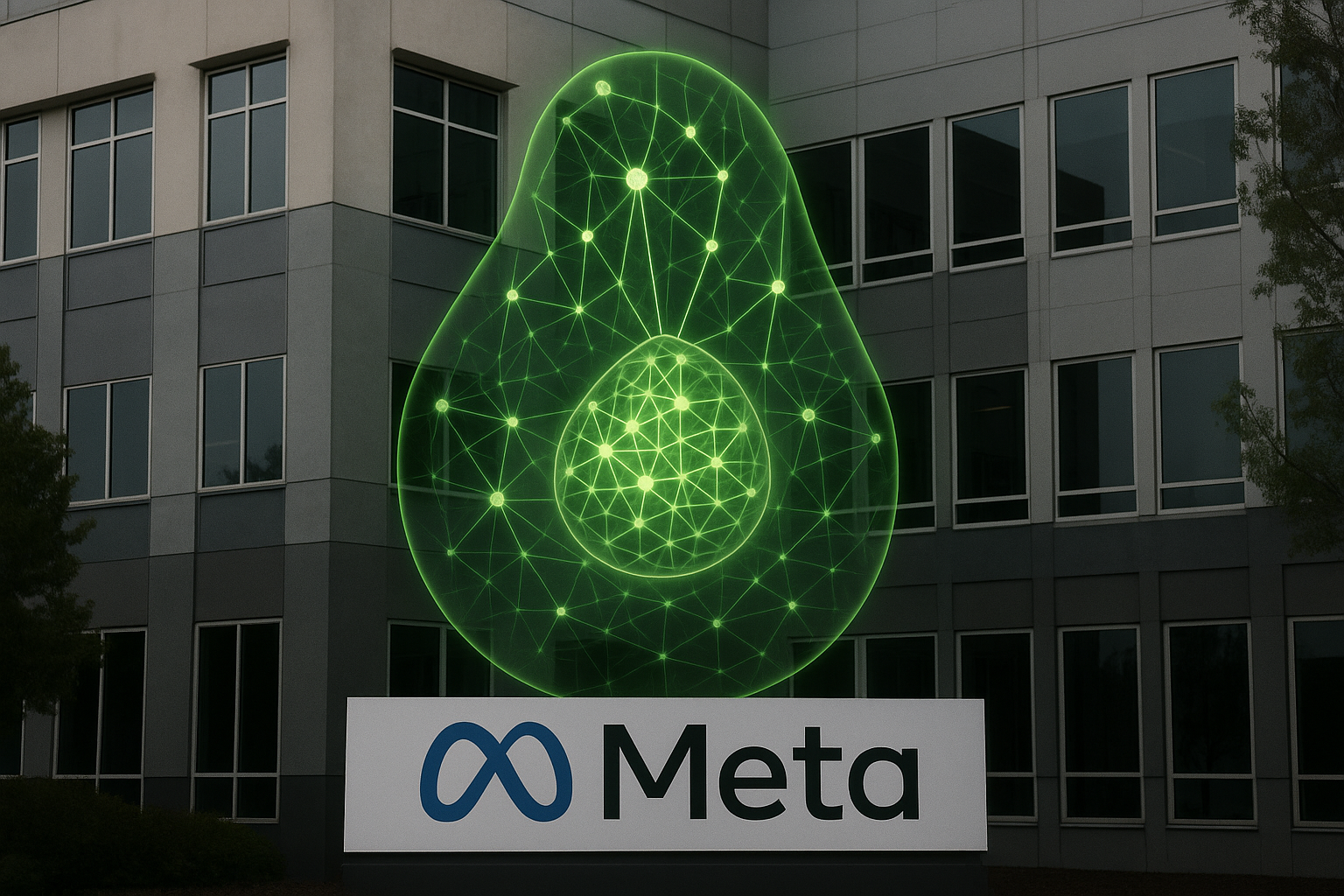
CNBC reports that Meta is working on a new large-scale AI model called Avocado, which may be released as a proprietary system as the company reassesses its open-source approach.
Meta is developing a next-generation artificial-intelligence model internally referred to as “Avocado,” according to new reporting from CNBC. The project represents a potential strategic turn for the company, which has spent years promoting open-source AI models like LLaMA that competitors, researchers and startups could freely build on.
Sources familiar with the effort say Avocado is designed to compete directly with frontier-level LLMs from OpenAI, Google and Anthropic. Unlike Meta’s recent open-source releases, Avocado may ship as a closed, proprietary model, reflecting Meta’s growing interest in higher-value commercial applications and stricter IP control.
Analysts note that Meta faces increasing pressure to monetize its multibillion-dollar AI investments. A proprietary model could enable tighter integration across Instagram, Facebook, WhatsApp and Meta’s hardware ecosystem — including headsets and wearable devices — while protecting the company’s competitive edge.
The report suggests Avocado will focus on multimodal capabilities, enabling it to process text, images, video and audio with improved context understanding and personalization tools. The model is reportedly being trained on more advanced infrastructure inside Meta’s expanding U.S. data-center network.
Experts say the shift could signal a broader transformation in the AI landscape. Meta’s open-source stance has shaped the industry for years, fueling rapid innovation and widespread adoption. A proprietary pivot, they warn, could reshape access, competition and safety-research dynamics.
Meta has not publicly commented on Avocado but recently indicated it is exploring “new approaches” to balancing openness with commercial strategy.
More details are expected later this year as Meta prepares its next generation of AI platforms.