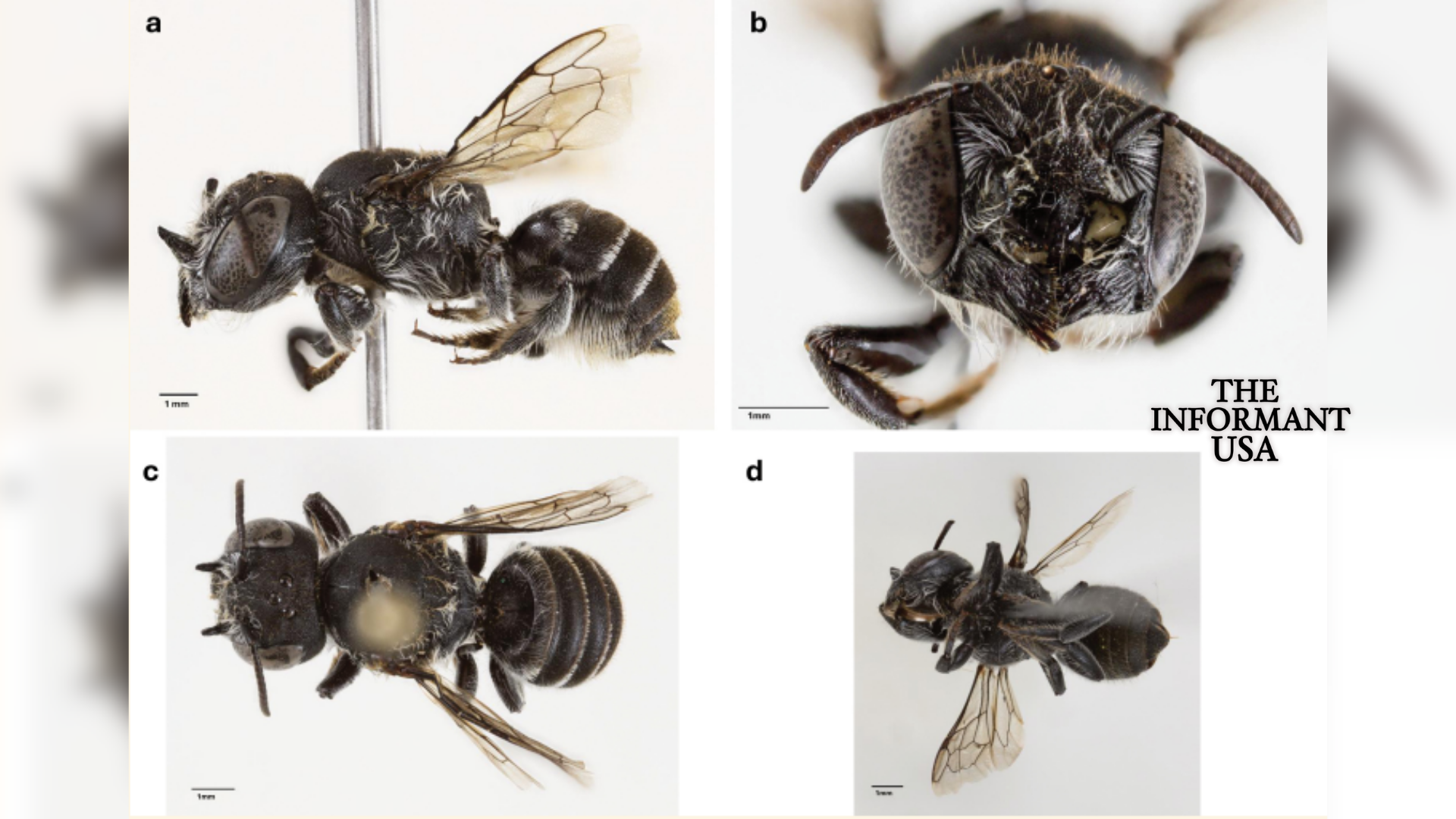
Megachile (Hackeriapis) lucifer, a striking new native bee with tiny horn-like features, highlights the hidden diversity of Australia’s pollinators.
Scientists in Western Australia have discovered a new native bee species with distinctive devil-like horns, officially named Megachile (Hackeriapis) lucifer. The discovery, made in the Goldfields region, underscores how much remains unknown about Australia’s native pollinators — and the urgent need to protect them.
The species was identified during ecological surveys of the critically endangered wildflower Marianthus aquilonarius, which grows exclusively in the Bremer Range, between the towns of Norseman and Hyden.
Lead researcher Dr. Kit Prendergast, from the Curtin School of Molecular and Life Sciences, said the bee’s unusual horned appearance inspired the name lucifer — Latin for “light-bringer,” and a playful nod to its devilish features and the researcher’s fondness for the Netflix character Lucifer.
“The female had these incredible little horns on her face,” said Dr. Prendergast. “When I was writing up the description, I happened to be watching the show Lucifer, and the name just fit perfectly.”
DNA barcoding confirmed that the male and female specimens matched but did not correspond to any known bee species in existing databases. It is the first new member of its genus to be described in more than 20 years, marking a significant moment in Australian entomology.
Dr. Prendergast emphasized the importance of studying native bees before their habitats are altered by mining or climate change.
“Because this species was found in the same small area as the endangered wildflower, both could be at risk from habitat disturbance,” she said. “We risk losing species before we even realize they exist.”
The study’s publication coincides with Australian Pollinator Week, an annual event celebrating the vital role of bees, butterflies, and other pollinators in sustaining ecosystems and agriculture.
The research was supported by the Atlas of Living Australia, the Goldfields Environmental Management Group, and the USDA Agricultural Research Service.