INVESTMENT BOLSTERS NVIDIA’S PUSH INTO ADVANCED CHIP DESIGN, AUTOMATION AND ACCELERATED COMPUTING
Nvidia has bought a $2 billion stake in Synopsys to strengthen joint development in computing power, chip-design automation, and AI-driven engineering tools.
Nvidia has taken a $2 billion equity stake in Synopsys, one of the world’s leading semiconductor-design software companies, in a move aimed at deepening collaboration on advanced computing and AI-driven engineering systems. The investment reinforces Nvidia’s strategy to integrate more deeply into the semiconductor design ecosystem amid rising demand for accelerated computing tools.
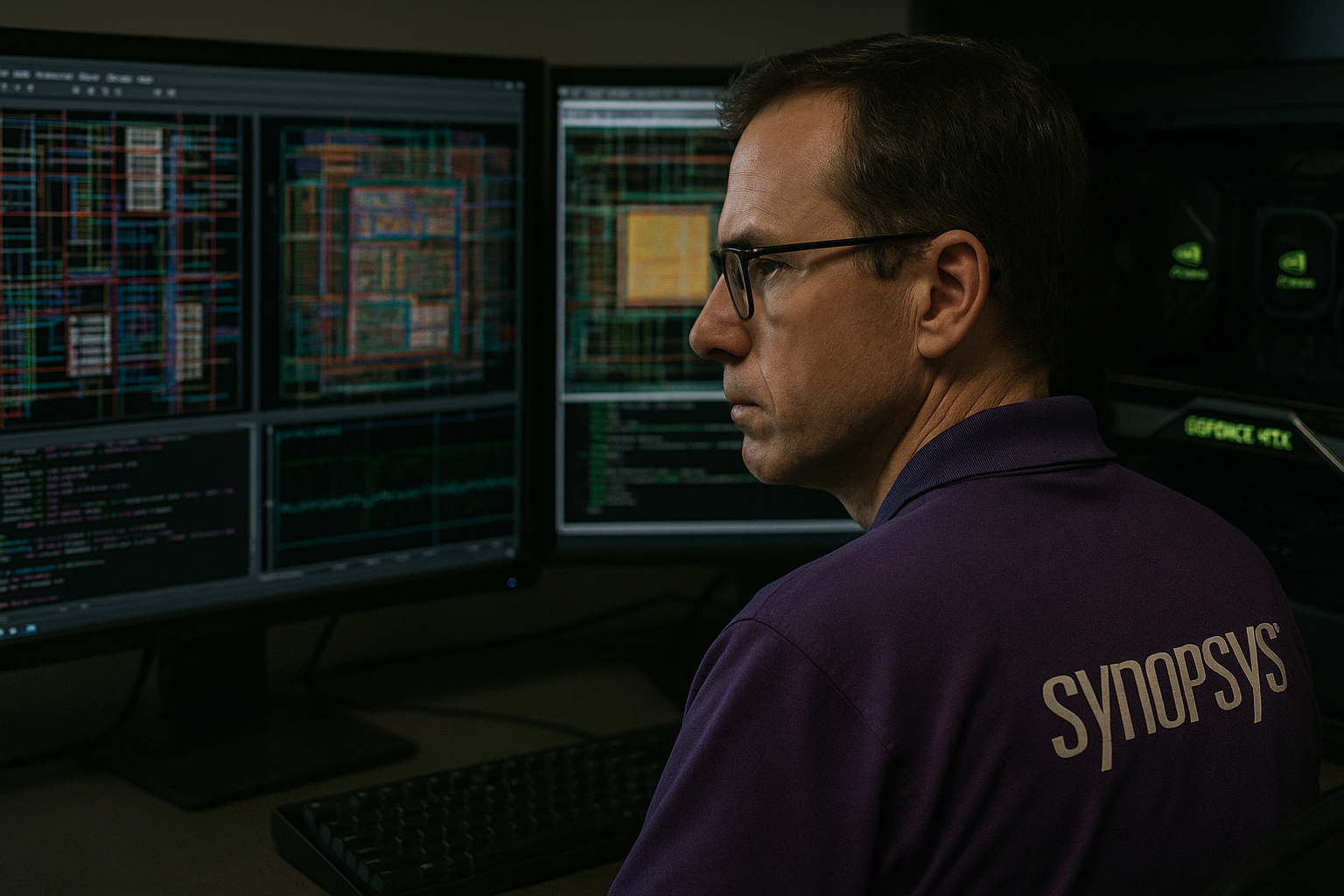
According to industry analysts, the partnership focuses on combining Nvidia’s GPU-accelerated platforms with Synopsys’ Electronic Design Automation (EDA) technologies — the software used to design, test and optimize modern chips. The integration is expected to significantly improve simulation speed, design accuracy and energy-efficiency modeling for next-generation processors.
The collaboration will also support Nvidia’s broader ambitions in AI engineering, including more efficient workflow automation and advanced chip-architecture development. As AI model sizes grow and computing workloads intensify, both companies see major commercial value in tools that compress development cycles and expand performance limits.
Synopsys, already a dominant force in EDA software, gains closer access to Nvidia’s AI hardware roadmap and accelerated-computing stack. Experts say this relationship could reshape parts of the semiconductor industry, enabling faster iteration on complex chip designs that power data centers, autonomous systems and high-performance computing.
The investment comes as competition intensifies across the global chip sector. Companies such as AMD, Google, and custom AI-chip startups are racing to develop new architectures, pushing major players like Nvidia to invest heavily in innovation partnerships.
Nvidia has not commented on whether additional stake increases are planned, but executives say the collaboration will be central to future breakthroughs in AI-driven engineering and silicon design.