SETTLEMENT MARKS ONE OF THE LARGEST MUNICIPAL LABOR AGREEMENTS IN THE SERVICE INDUSTRY
Starbucks will pay $35 million to settle allegations that it violated New York City labor laws related to employee scheduling, marking a major development in corporate labor relations.
Starbucks has agreed to pay $35 million to resolve a labor-law dispute with New York City workers who accused the company of violating the city’s “Fair Workweek” scheduling rules. The settlement is one of the largest of its kind involving a national food-and-beverage chain, reflecting growing scrutiny of scheduling practices in the service industry.
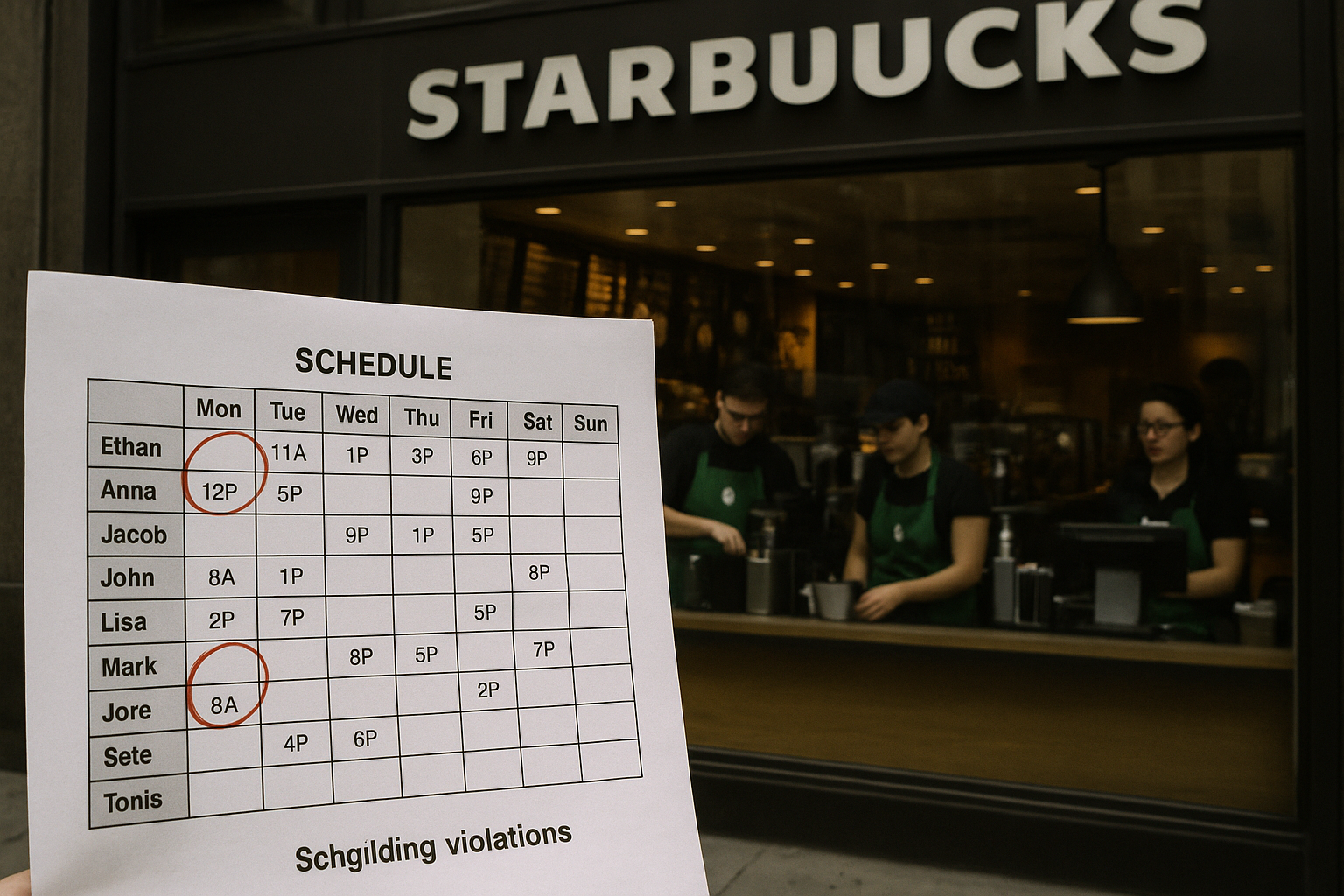
The dispute centered on allegations that Starbucks managers routinely posted last-minute schedule changes, failed to provide adequate notice, and required employees to work “clopening” shifts — closing late at night and returning early the next morning — without proper compensation. Starbucks denied wrongdoing but said the settlement allows the company to “move forward and maintain strong relationships with partners,” the term it uses for employees.
New York City officials said the case demonstrates the importance of enforcing Fair Workweek protections, which require predictable schedules, advance notice and premium pay for abrupt changes. Labor advocates hailed the settlement as a win for hourly workers, many of whom rely on stable schedules to balance multiple jobs, childcare and rising living expenses.
The agreement comes as Starbucks faces increased national pressure around labor issues, including unionization efforts, pay disputes and federal labor board complaints. Analysts say the NYC settlement could influence similar legal challenges in other major cities with scheduling-protection laws.
Starbucks will distribute the settlement funds among affected NYC workers and will implement additional compliance measures across its stores to ensure adherence to scheduling regulations.
While the company emphasized its commitment to fair treatment of employees, the settlement highlights how scheduling practices remain one of the most contested aspects of the modern service workplace.