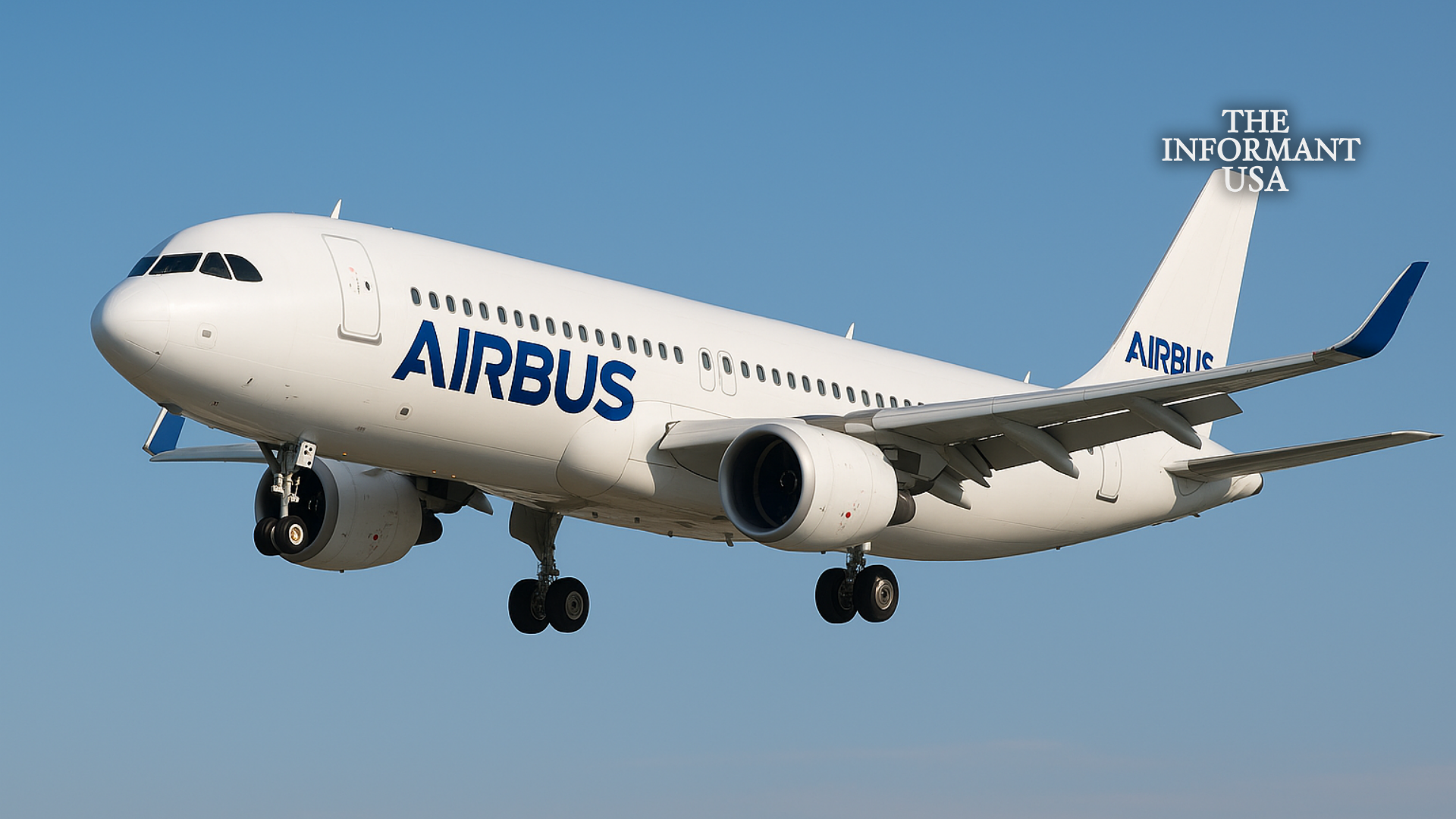
Shares rebound as Airbus lowers its full-year delivery forecast to 790 jets following a fuselage machining issue, but maintains profit goals thanks to strong A320 demand and defense support.
Airbus (AIR.PA) lowered its full-year commercial jet delivery target by 4% on Wednesday — from 820 jets to around 790 — after discovering a fuselage quality flaw affecting hundreds of aircraft.
Despite the industrial setback, Airbus said it would maintain all financial targets, sending its shares up more than 3% after a two-day slide of nearly 7%.
The decision comes one day after CEO Guillaume Faury acknowledged “weak” November deliveries caused by the issue and told Reuters that the company would determine the impact for the rest of the year “in the hours and days” ahead.
THE FUSELAGE ISSUE: NOT A SAFETY RISK BUT A COSTLY DELAY
Reuters first reported the flaw earlier this week, following an emergency recall of thousands of A320s related to a separate software issue involving solar radiation.
The new problem involves inconsistent thickness in fuselage panels machined by one of Airbus’s two external suppliers.
Although not considered an immediate safety hazard — the parts still withstand stress beyond operational limits — airlines are reluctant to accept aircraft that could require expensive structural repairs in the future.
Airbus has paused deliveries to carry out rapid inspections.
Scope of the inspections
- 628 aircraft must be inspected
- 168 are already in service
- Dozens of production aircraft have shown the flaw
- Most issues are near the forward passenger door, with some also found on rear fuselage zones
- Each repair requires 3–5 weeks, according to The Air Current
Only a portion of jets will need full panel replacement.
A320 PROFITABILITY BOOSTS CONFIDENCE
Analysts say Airbus’s decision to keep financial guidance unchanged reflects the strength of its A320 program — now the most-delivered aircraft in aviation history, surpassing the Boeing 737.
Defense and helicopter divisions also continue to provide stability.
While Airbus benefits from strong global demand and Boeing’s ongoing struggles, it has faced persistent supply-chain headwinds:
- Engine shortages
- Seat production delays
- Manufacturing chain disruptions
Now the fuselage issue adds a new layer of complexity as the company tries to execute one of its biggest yearly production ramps in decades.