THE ENTERTAINMENT INDUSTRY IS ENTERING ITS MOST VOLATILE POWER STRUGGLE IN DECADES AS STUDIOS FIGHT FOR CONTENT DOMINATION
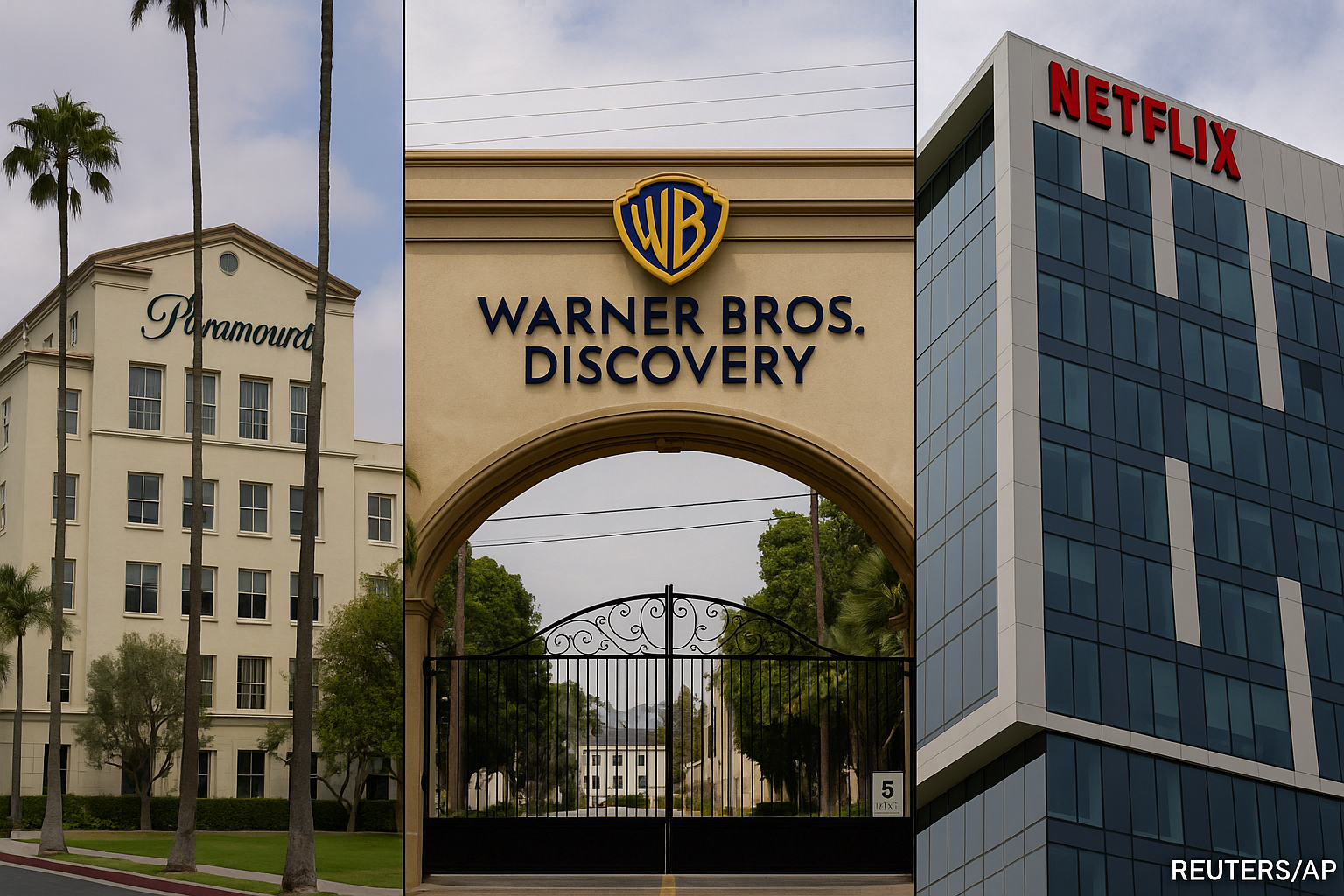
Paramount has launched a $108 billion hostile takeover bid for Warner Bros. Discovery, escalating a dramatic battle in the streaming and entertainment sector following Netflix’s competing $72 billion offer.
Paramount has ignited a massive escalation in the entertainment industry by submitting a hostile takeover bid worth approximately $108 billion for Warner Bros. Discovery (WBD). The move comes shortly after Netflix shocked the industry days earlier with its own $72 billion takeover deal for the same studio.
According to insiders, Paramount’s offer bypasses WBD leadership and targets shareholders directly — a defining feature of a hostile bid. Analysts say this signals Paramount’s intent to radically reshape its position in the global content market, where consolidation has become the defining force of the past decade.
Warner Bros. Discovery controls one of the most valuable entertainment portfolios in the world, including DC Studios, HBO, Warner Bros. Pictures, Cartoon Network, Adult Swim, Discovery Channel, and vast international distribution assets. Acquiring WBD would instantly transform Paramount into a hyper-consolidated mega-studio with unmatched content leverage.
Netflix’s earlier $72B bid had already stunned Hollywood, marking one of the largest attempted acquisitions in media history. Paramount’s $108B bid now raises the stakes dramatically, pushing the battle to unprecedented levels and raising concerns among regulators about content consolidation and market dominance.
Industry analysts warn that the takeover fight may trigger a years-long legal, regulatory and corporate battle. U.S. and European antitrust authorities are expected to scrutinize both bids, given the enormous market power the acquiring studios would gain.
Warner Bros. Discovery has not yet responded formally to either bid. Insiders say the company’s board is under extreme pressure as shareholders weigh financial incentives, regulatory risks, and long-term strategic identity.
This marks one of the most explosive chapters yet in the Streaming Wars, with the future of global entertainment distribution hanging in the balance.