WEARABLE DEVICE PROMISES REAL-TIME ASSISTANCE, MULTIMODAL PROCESSING AND SEAMLESS GOOGLE ECOSYSTEM INTEGRATION
Google has announced its first Gemini-powered AI glasses, expected to launch in 2026, expanding the company’s wearable-technology strategy.
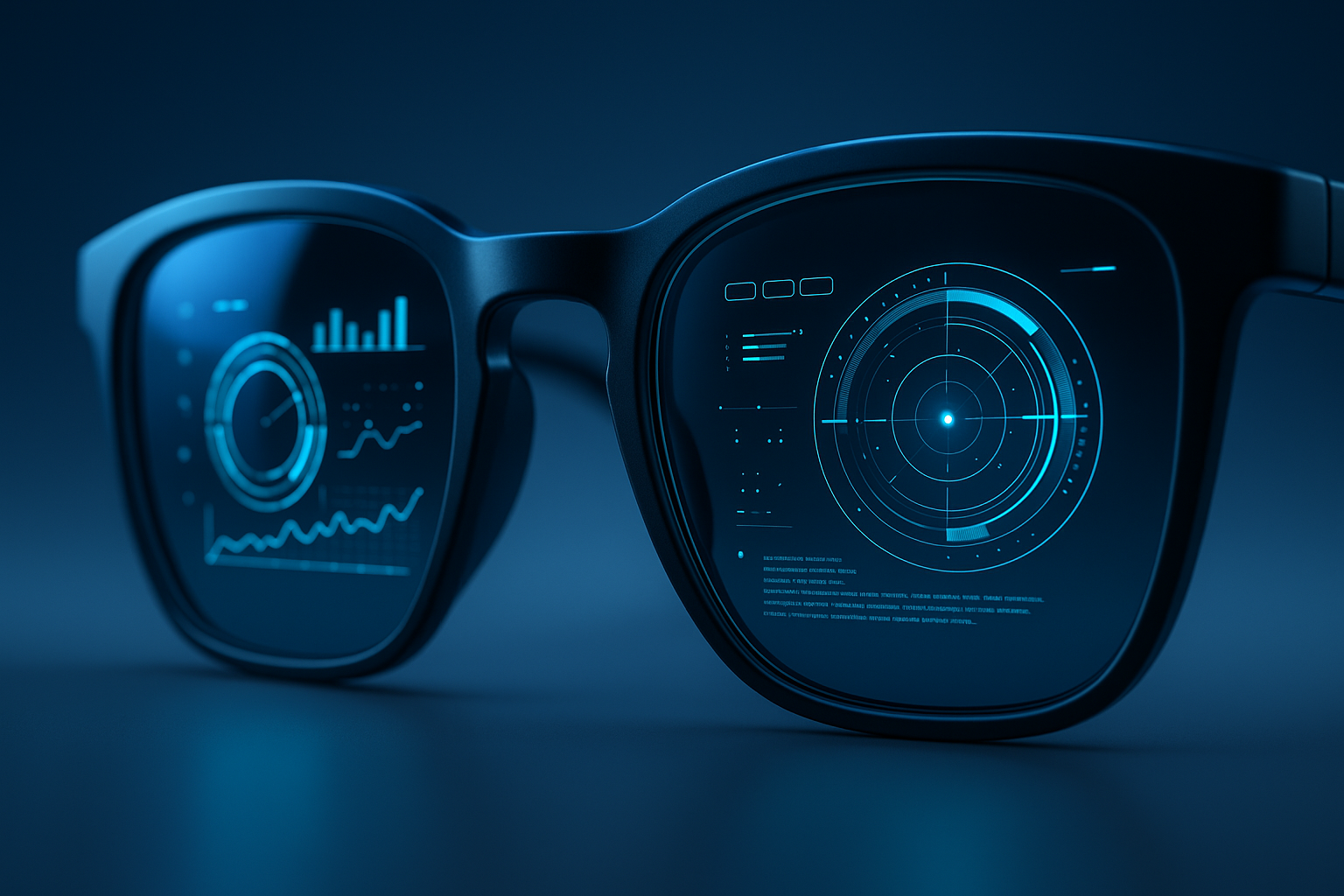
Google has officially unveiled plans for its first pair of AI-powered smart glasses, marking a major return to the wearable-tech arena. Powered by Google’s Gemini models, the device is designed to deliver real-time information, multimodal assistance and hands-free interaction — features the company says will redefine how users access AI throughout the day.
The glasses will reportedly support live translation, object recognition, contextual notifications, real-time navigation, and seamless integration with Google services including Maps, Search, Calendar and Assistant. Gemini’s multimodal capabilities would allow the device to interpret voice, text and visual inputs simultaneously.
Industry analysts say the project represents Google’s most ambitious wearable push since the original Google Glass, which launched more than a decade ago but failed to gain mass adoption. The new attempt appears aimed at a mainstream audience, leveraging vastly improved AI performance and consumer familiarity with augmented-reality concepts.
Google has not revealed final hardware specs, but early prototypes are described as lightweight, minimalistic and designed for all-day use, with improved battery efficiency and on-device processing for privacy. Cloud-assisted performance will still play a role for more complex Gemini tasks.
The AI glasses are expected to compete with emerging wearable-AI products from Meta, Apple and startups in the spatial-computing space. Analysts say the 2026 launch window positions Google to enter the market at a moment when consumer AI adoption is accelerating rapidly.
Further details — including pricing, design and software demo previews — are expected at upcoming Google I/O conferences and industry events throughout 2025–2026.