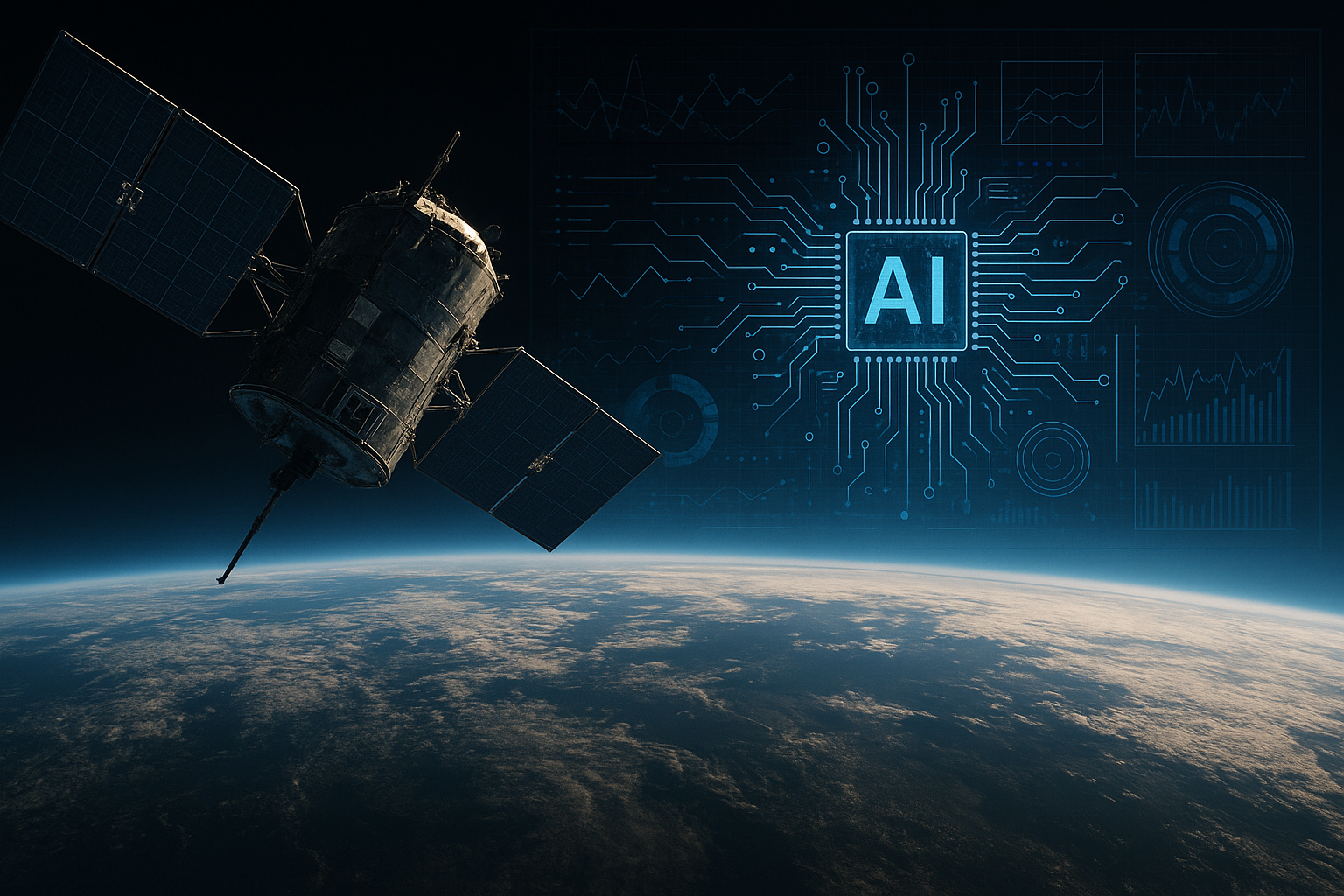
TECHNOLOGY COULD TRANSFORM SATELLITE AUTONOMY, DEEP-SPACE RESEARCH AND REAL-TIME DATA PROCESSING BEYOND EARTH
A startup backed by Nvidia has trained the first AI model in space, demonstrating new potential for off-planet computing during satellite missions.
A startup supported by Nvidia has achieved a major technological milestone after announcing it had successfully trained the first artificial-intelligence model in space. The training took place aboard a commercial satellite equipped with specialized onboard computing hardware capable of running machine-learning processes autonomously.
According to the company, the experiment was designed to test whether AI systems can be trained — not just executed — in orbit. Training an AI model in space could allow satellites to analyze data in real time, adapt to unexpected conditions and operate with far greater autonomy than current Earth-dependent systems.
Engineers say this breakthrough could dramatically reduce the need to transmit raw data back to Earth, a process limited by bandwidth, latency and cost. Instead, satellites could process sensor input on-site and send back only essential insights, improving the speed of environmental monitoring, disaster detection and space-weather forecasting.
Nvidia’s backing suggests strong industry confidence in the startup’s ability to scale its technology. Specialized Nvidia hardware reportedly powered the onboard compute system, optimized for low-power, high-efficiency environments typical of satellites.
Space-technology analysts say the accomplishment could reshape how commercial and scientific missions operate. Future deep-space probes, lunar infrastructure and even Mars-bound missions may benefit from autonomous AI that can train and adapt far from Earth.
The startup plans further in-orbit experiments over the next year, including larger models and multi-satellite AI collaboration.