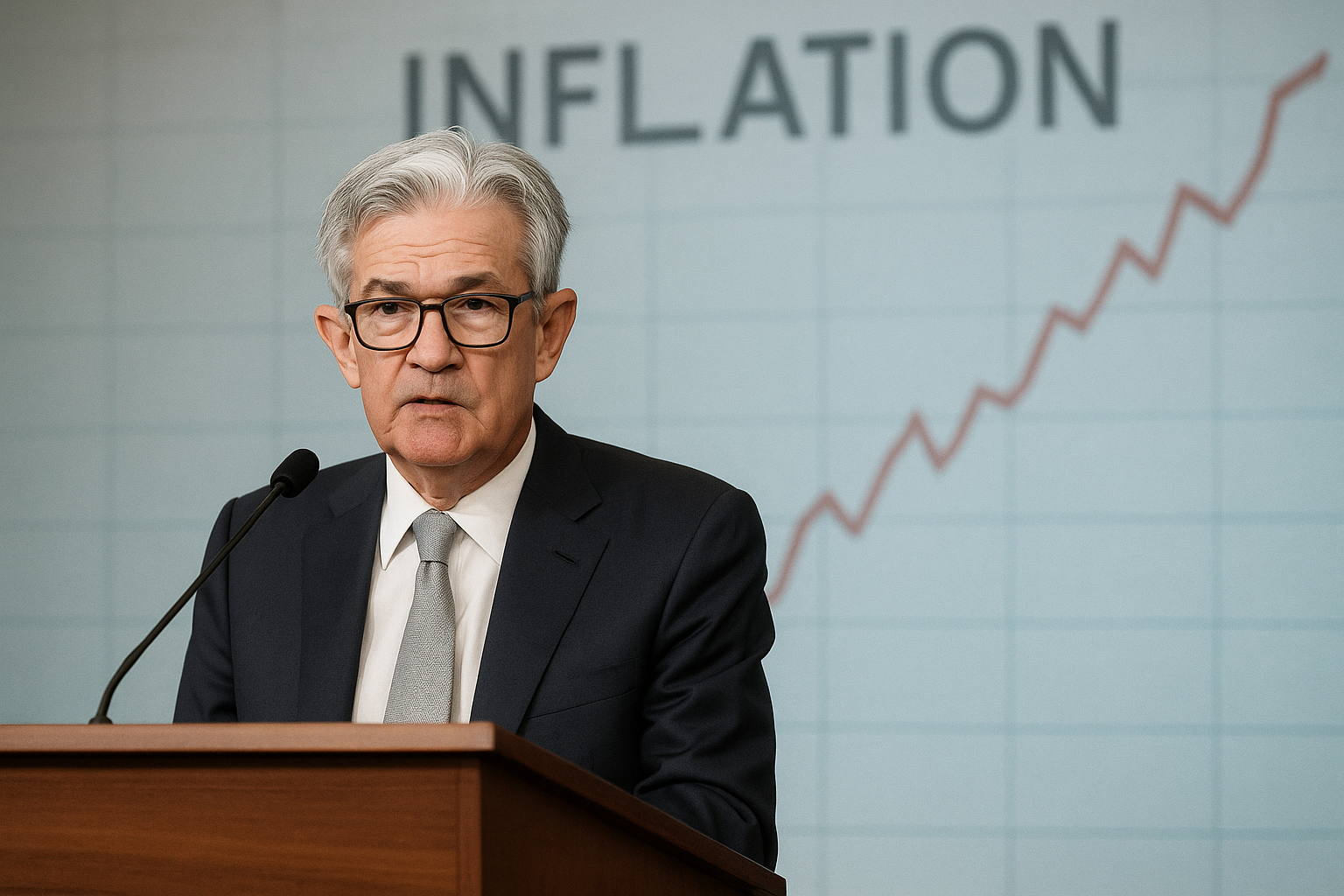
FED CHAIR SIGNALS CONFIDENCE IN MONETARY PATH BUT WARNS THAT POLICY ALONE CANNOT OFFSET TRADE-RELATED PRICE PRESSURES
Federal Reserve Chair Jerome Powell said the Fed will achieve its 2% inflation target, adding that tariffs are a major contributor to above-target inflation levels.
Federal Reserve Chair Jerome Powell said Thursday that the U.S. central bank remains firmly committed to bringing inflation back down to its 2% target, telling reporters that “we will deliver 2% inflation.” Powell emphasized that the Federal Reserve sees clear progress but believes additional time and careful policy management will be necessary.
In a notable comment, Powell said “it is really tariffs that is causing most of the inflation overshoot,” pointing to recent trade measures that have increased the cost of imported goods. While he did not specify which tariffs he was referring to, analysts said the remark likely relates to expanded duties on consumer electronics, machinery, autos, and key manufacturing inputs.
Economists note that Powell’s statement underscores the limits of monetary policy in addressing inflation drivers tied to trade policy. The Fed can influence demand through interest-rate adjustments, but tariff-driven supply-side pressures fall outside its control.
Financial markets reacted cautiously. Treasury yields softened as investors interpreted Powell’s remarks as a signal that the Fed remains confident in easing inflation — but also aware that non-monetary factors are influencing prices. Stocks showed mixed movement throughout the session.
Some lawmakers pushed back on Powell’s comment, arguing that tariffs support domestic manufacturing and national-security goals, even if they temporarily raise consumer prices. Others said the Fed’s acknowledgment of tariff impacts further supports calls to revise the U.S. trade regime.
Powell said the central bank will continue monitoring energy costs, wage growth, and global supply conditions as it charts the next steps for monetary policy.