UNIONIZED WORKERS PUSH FOR CONTRACT DEAL AS LABOR UNREST THREATENS TURNAROUND PLAN
SEATTLE — November 12, 2025. Starbucks is facing a surging barista strike across multiple U.S. cities, a labor showdown that analysts warn could derail the company’s fragile turnaround strategy as unionized workers press for final contract negotiations.
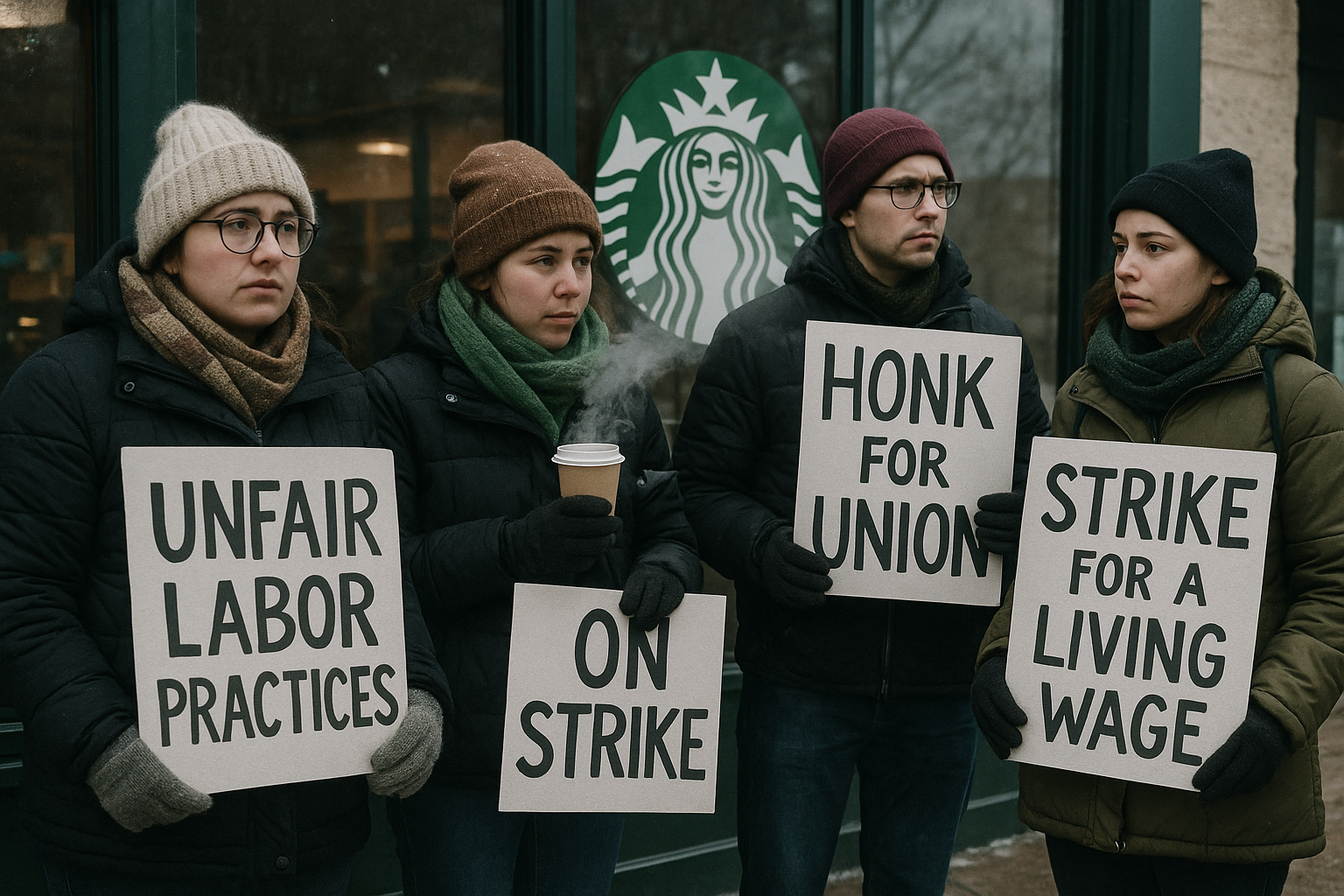
The walkouts, organized by Starbucks Workers United, have spread to over 200 stores nationwide, with employees demanding improved pay, predictable scheduling, and protections against retaliation for organizing. The strike coincides with the company’s peak holiday season — one of its most profitable quarters.
In recent days, workers have staged coordinated protests outside Starbucks locations in New York, Chicago, Seattle, and Los Angeles, holding signs reading “No Contract, No Coffee.” Some stores have been forced to reduce hours or close temporarily due to staffing shortages.
Starbucks has long faced criticism for its handling of unionization efforts. Since 2021, when the first Buffalo store voted to unionize, more than 380 stores have followed suit — but the company and the union have yet to agree on a single collective bargaining agreement.
The National Labor Relations Board (NLRB) has accused Starbucks of violating federal labor law by refusing to bargain in good faith, a claim the company denies. In a statement, Starbucks said it “remains committed to working directly with partners (employees) to modernize operations and create meaningful benefits.”
CEO Laxman Narasimhan, who took over in 2023, has spent months pushing a new turnaround plan focused on customer service, automation, and streamlined operations. However, analysts warn that prolonged strikes could undermine morale and investor confidence. “Labor disruptions risk hitting both margins and brand loyalty,” said Sara Klein, a retail strategist at Morgan Stanley.
For workers, the strike is also symbolic — a test of the broader U.S. labor movement that has recently seen victories at companies like Amazon and UPS. “We’re not just fighting for coffee,” said one organizer in Seattle. “We’re fighting for dignity at work.”
The union has not specified how long the strike will continue but hinted that more locations could join in coming weeks if negotiations fail. Investors and consumers alike are watching closely, as one of America’s most recognizable brands confronts its most sustained labor challenge yet.