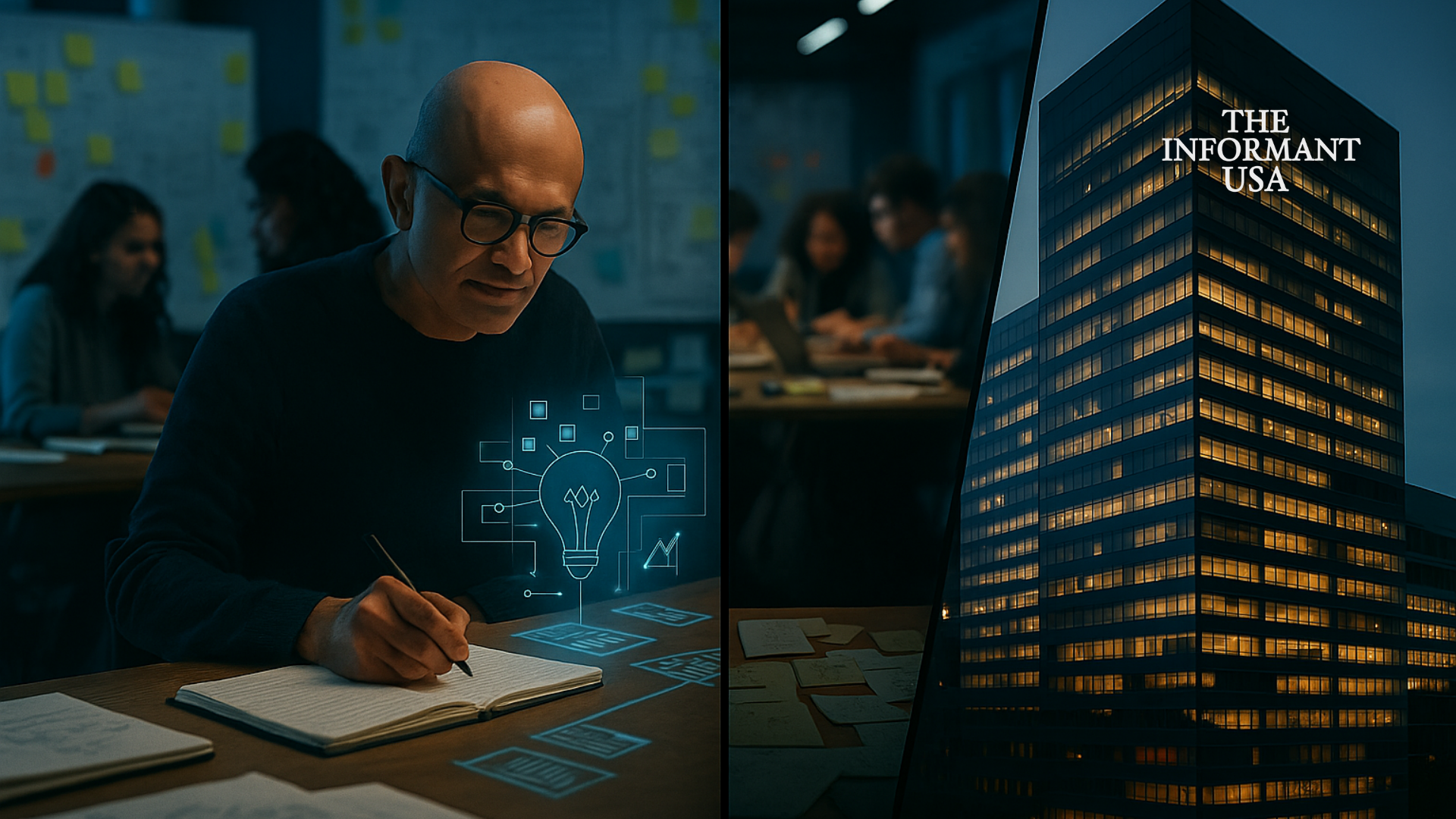
The Microsoft CEO says he spends weekends studying startup product-building habits as Big Tech races to shed hierarchy and move at AI speed.
Microsoft CEO Satya Nadella says he is in “study hall mode,” spending his weekends analyzing how startups build products — because Microsoft’s enormous scale has become a “massive disadvantage” in the race to develop AI at startup speed.
In an interview with Axel Springer CEO Mathias Döpfner on the “MD MEETS” podcast, Nadella said young companies move fast because product, science, and infrastructure teams sit at the same table, make decisions instantly, and iterate without layers of approval.
At Microsoft, he noted, those functions are split across three divisional heads, slowing down everything from prototyping to deployment. His comments echo a broader tech-industry shift as Meta, Google, Amazon, and others aggressively cut middle management to speed up AI experimentation.
“UNLEARNING SUCCESS” TO SURVIVE THE AI ERA
Nadella said large organizations must “unlearn the things that made them successful” if they want to remain relevant as AI rewrites how products are built and shipped.
He emphasized replacing a “know-it-all” mindset with a “learn-it-all” mentality — a cultural shift he has been attempting to push internally.
A leaked Microsoft org chart recently reviewed by Business Insider shows Nadella now has 16 direct reports, hand-selected to break down silos and accelerate the company’s transition toward a unified AI-driven structure.
WHY MOST CORPORATE AI PROJECTS FAIL
Nadella also warned that most enterprise AI initiatives collapse because companies treat AI as a traditional IT upgrade, rather than a full operational transformation.
He said companies must fix four foundational elements if they want AI to succeed:
- Rethink workflows from scratch
- Adopt modern AI tools
- Train employees at every level
- Ensure data isn’t trapped in outdated systems
Only organizations willing to rebuild their foundations — and leaders willing to abandon old habits — will see meaningful gains from AI, he said.