CONCERNS GROW OVER WHETHER HIS POLICY VIEWS CAN STABILIZE MARKETS AMID INFLATION AND RATE UNCERTAINTY
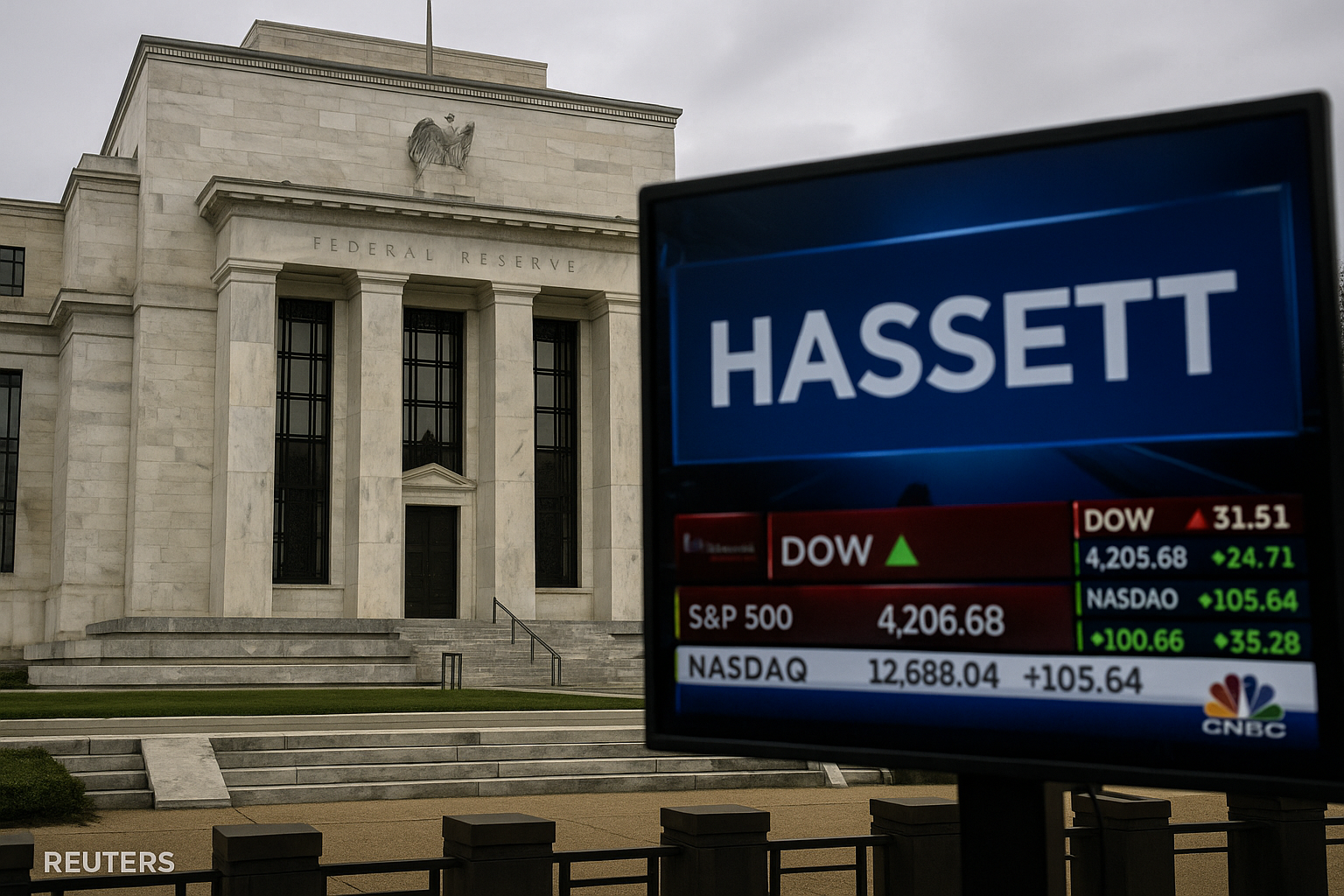
Kevin Hassett, President Trump’s expected nominee for Federal Reserve chair, is facing skepticism from bond markets and analysts amid questions about how he would manage monetary policy in a turbulent economic environment.
Kevin Hassett — a longtime economist and former Trump administration advisor — is under renewed scrutiny as he is widely expected to be President Trump’s nominee for the next Federal Reserve chair. Bond investors and financial analysts are expressing concerns about whether Hassett’s approach to interest rates, inflation and balance-sheet policy can guide the U.S. economy through a period of heightened uncertainty.
Market observers point to rising Treasury volatility, lingering inflation pressures and fragile credit conditions as key challenges the next Fed chair must navigate carefully. Some analysts argue that Hassett’s prior public comments favoring lower rates could clash with current market realities, where policymakers must balance inflation control with recession risks.
Bond traders say the Fed’s credibility is at stake and warn that any missteps in messaging or policy direction under a new chair could trigger rapid yield swings or broader financial-market instability. Others note that Hassett has experience shaping fiscal and economic policy but has never overseen an institution as complex as the Federal Reserve.
Supporters counter that Hassett’s background in economic modeling and growth-focused policy could help stabilize markets and encourage investment, especially if the administration pursues a coordinated fiscal-monetary strategy.
The White House has not formally confirmed Hassett’s nomination, but officials indicate an announcement could come soon. The move would follow President Trump’s shift in monetary-policy direction and his criticism of prior Fed leadership.
If selected, Hassett would take charge at a pivotal moment for the U.S. economy, inheriting responsibility for interest-rate strategy, inflation management and the Fed’s massive balance sheet.