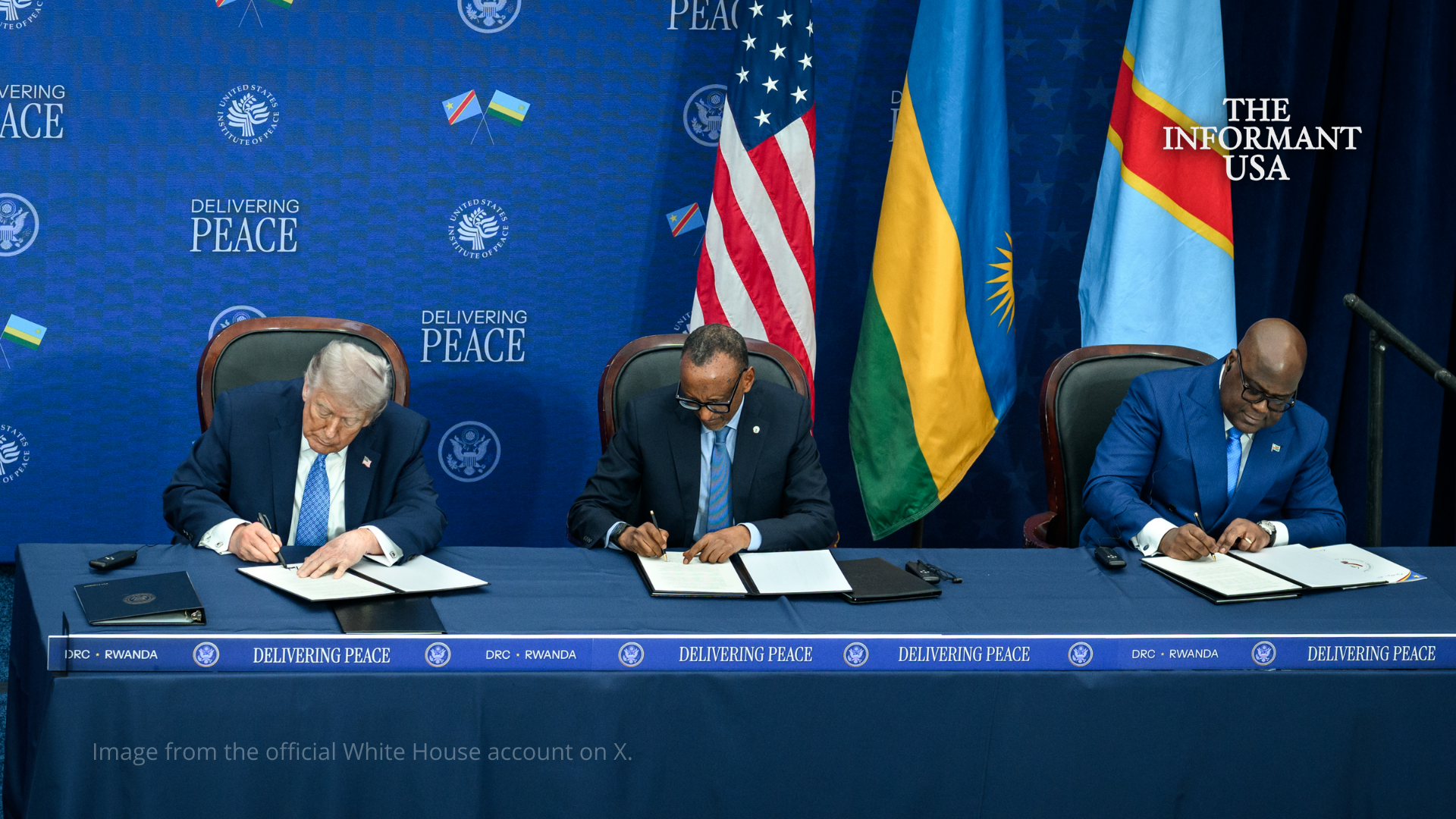
The leaders of Rwanda and the Democratic Republic of the Congo sign a major peace agreement at the Donald J. Trump Institute for Peace, marking a breakthrough in one of Africa’s most protracted regional conflicts.
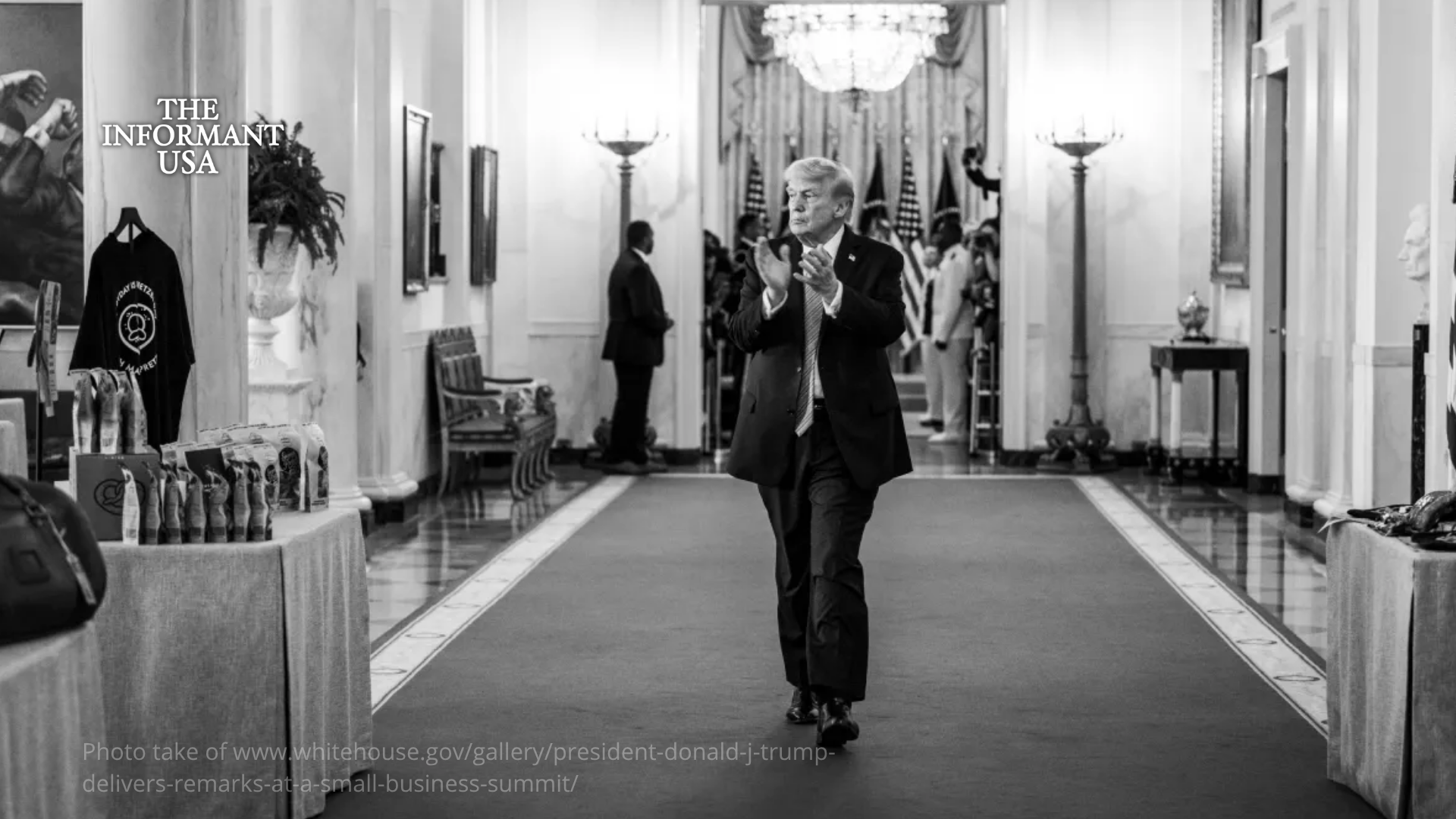
In a landmark diplomatic ceremony, President Donald J. Trump joined Rwandan President Paul Kagame and DRC President Félix Tshisekedi in Washington, D.C., where the two African leaders signed the Washington Accords, a sweeping peace agreement aimed at ending decades of instability, regional tensions, and cross-border conflict in Central Africa.
The signing took place at the recently inaugurated Donald J. Trump Institute for Peace, which hosted senior diplomats, military representatives, and members of the international community for what officials described as a “historic turning point for African stability.”
The Accords seek to stabilize the eastern Democratic Republic of the Congo, reduce militia activity, restore bilateral cooperation, and open the door for economic and humanitarian collaboration between Rwanda and the DRC.
A NEW ERA FOR CENTRAL AFRICA
U.S. officials hailed the Washington Accords as a major foreign-policy achievement, praising Rwanda and the DRC for committing to a roadmap of:
- Demilitarization and border de-escalation
- Joint counter-militia operations
- Humanitarian corridors for displaced civilians
- Economic development initiatives
- A regional monitoring mechanism backed by the U.S.
Trump called the signing “a historic moment for peace,” saying the agreement could transform regional security and advance long-term stability.
REGIONAL SIGNIFICANCE
The Rwanda–DRC conflict, driven by decades of ethnic tension, armed militias, and cross-border political disputes, has contributed to one of the world’s worst humanitarian crises.
Peace advocates say the Accords could be the beginning of a new diplomatic chapter, with the United States playing a central mediation role for the first time in years.
African Union officials and international observers are expected to join implementation talks in early 2026.