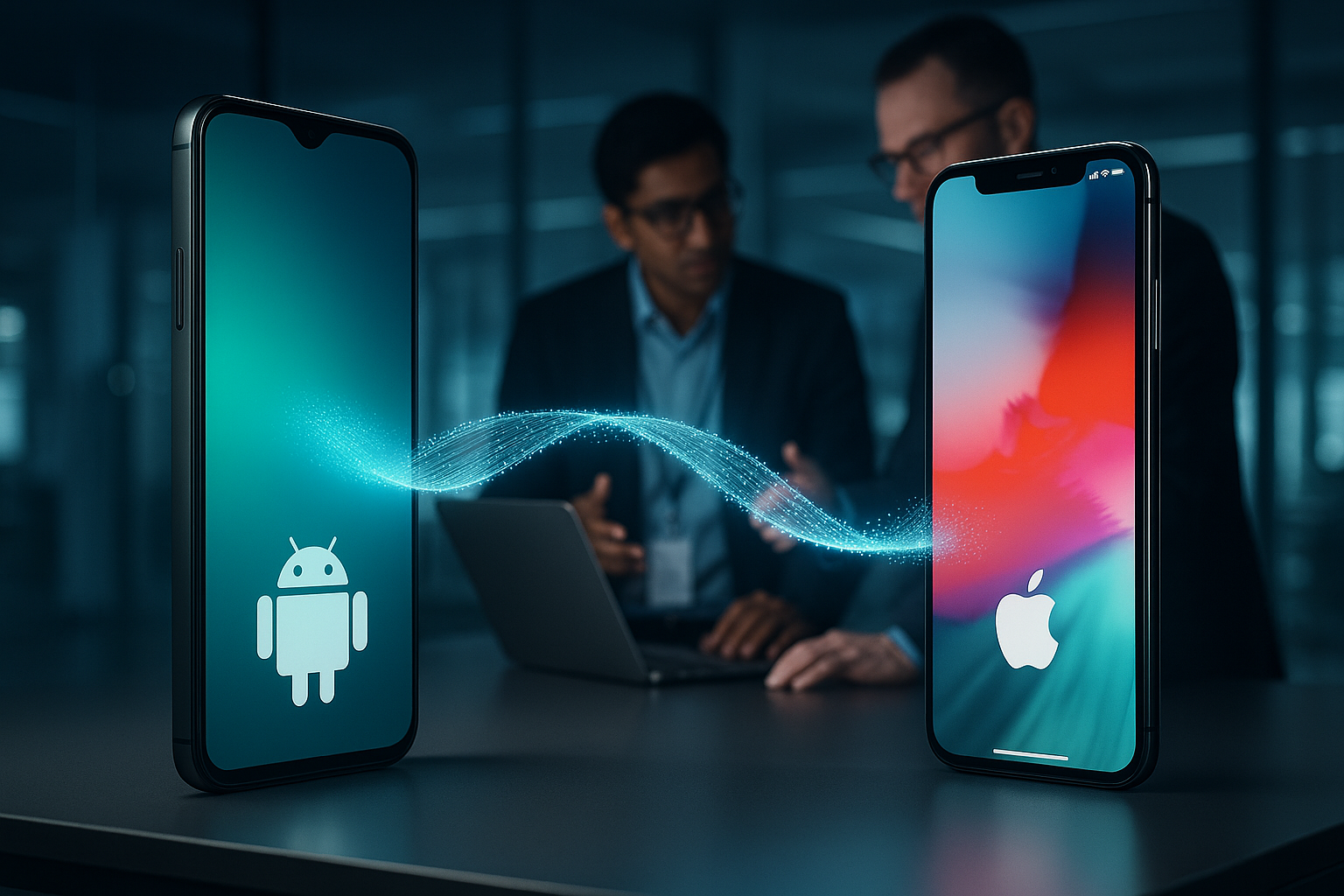
THE COLLABORATION AIMS TO REDUCE USER FRICTION, BOOST COMPETITION AND SET NEW CROSS-PLATFORM STANDARDS
Google and Apple are partnering to create a smoother, more transparent process for switching between Android and iPhone devices — a historic collaboration in the mobile industry.
In a landmark move that few expected, Google and Apple have announced a joint initiative to make switching between Android and iPhone devices significantly easier. The companies will co-develop shared standards and migration tools that allow users to transfer apps, data, settings and messages with fewer restrictions and far less friction.
Industry analysts describe the collaboration as one of the most meaningful cross-platform agreements in the history of smartphones. For over a decade, barriers between the two ecosystems — from messaging compatibility to app portability — have been a defining feature of the mobile market. This partnership signals a potential shift toward greater consumer choice and interoperability.
According to early details, the initiative will include unified backup formats, cross-platform cloud migration, improved iMessage and RCS data handling, and tools that ensure a more accurate transfer of photos, contacts, calendars and third-party app data. Both companies say privacy safeguards will remain intact.
Regulatory pressure is widely seen as a key driver behind the partnership. U.S. and European regulators have increasingly scrutinized ecosystem lock-ins and data-migration obstacles, arguing they limit competition. By partnering, Google and Apple may pre-empt stricter mandates while offering users a better experience.
Consumer advocates have already praised the move, saying simplified switching could encourage healthier competition between smartphones and reduce long-term platform dependency. Developers also expect more uniform data-transfer protocols that simplify app onboarding across platforms.
The companies plan to roll out early migration features later this year, with full implementation expected in 2026.