NEITHER COMPANY HAS PUBLICLY CONFIRMED THE DEAL, BUT SOURCES SAY IT WOULD MARK A MAJOR TURNING POINT IN ENTERTAINMENT–AI PARTNERSHIPS
Disney is reportedly considering a $1 billion investment in OpenAI and licensing more than 200 of its characters for ChatGPT and Sora, though no official statements have been released.
Disney is reportedly preparing to make a $1 billion investment in OpenAI, according to industry sources speaking to multiple media outlets. The deal — still unconfirmed by either company — would include licensing rights for over 200 of Disney’s most well-known characters for use across OpenAI’s platforms, including ChatGPT and the video-generation model Sora.
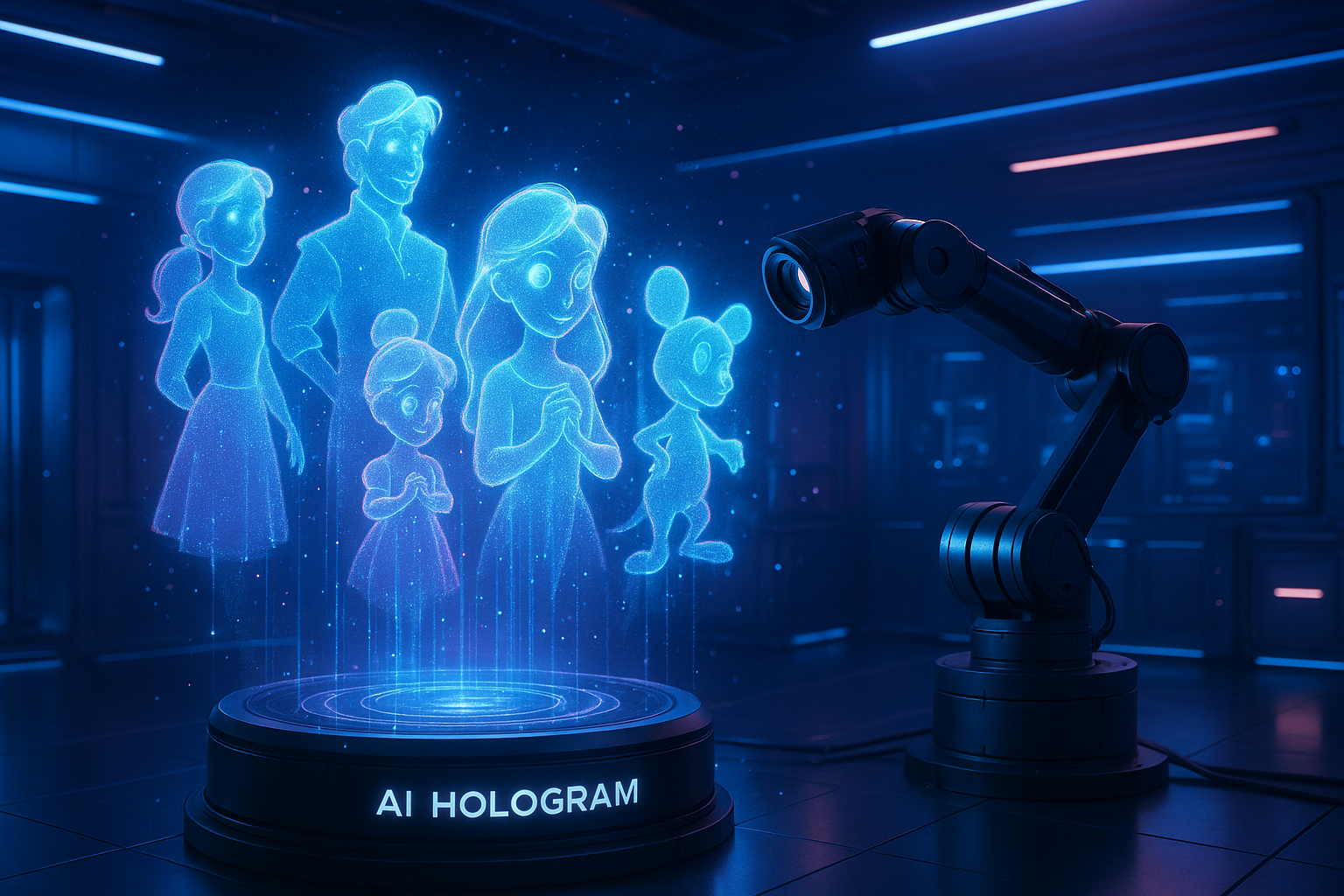
If finalized, the partnership would represent one of the biggest entertainment–AI collaborations to date, enabling AI-generated storytelling, interactive character experiences, and studio-level content tools using Disney’s vast intellectual-property catalog. Analysts say the move could reshape how Disney characters appear in digital experiences, educational tools, games, customer-service products, and virtual-production environments.
Sources say Disney would retain full copyright ownership, while OpenAI would receive limited licensing rights governed by strict brand-protection guidelines. This aligns with Disney’s long-standing approach to safeguarding character likenesses and thematic expressions. As part of the reported deal, Disney would also gain access to OpenAI’s latest generative-AI models for internal content creation, animation workflows, and theme-park technology.
However, experts caution that until Disney and OpenAI release formal statements, the details remain provisional. Major licensing agreements of this scale typically require board-level approval, SEC disclosures, and contractual transparency, none of which have yet been publicly filed.
Tech and entertainment analysts say the rumored partnership reflects an acceleration in Hollywood’s adoption of AI, particularly as studios search for cost-efficient production tools and new interactive content formats.
For now, investors and industry observers are watching closely to see whether either company confirms the reported billion-dollar collaboration.