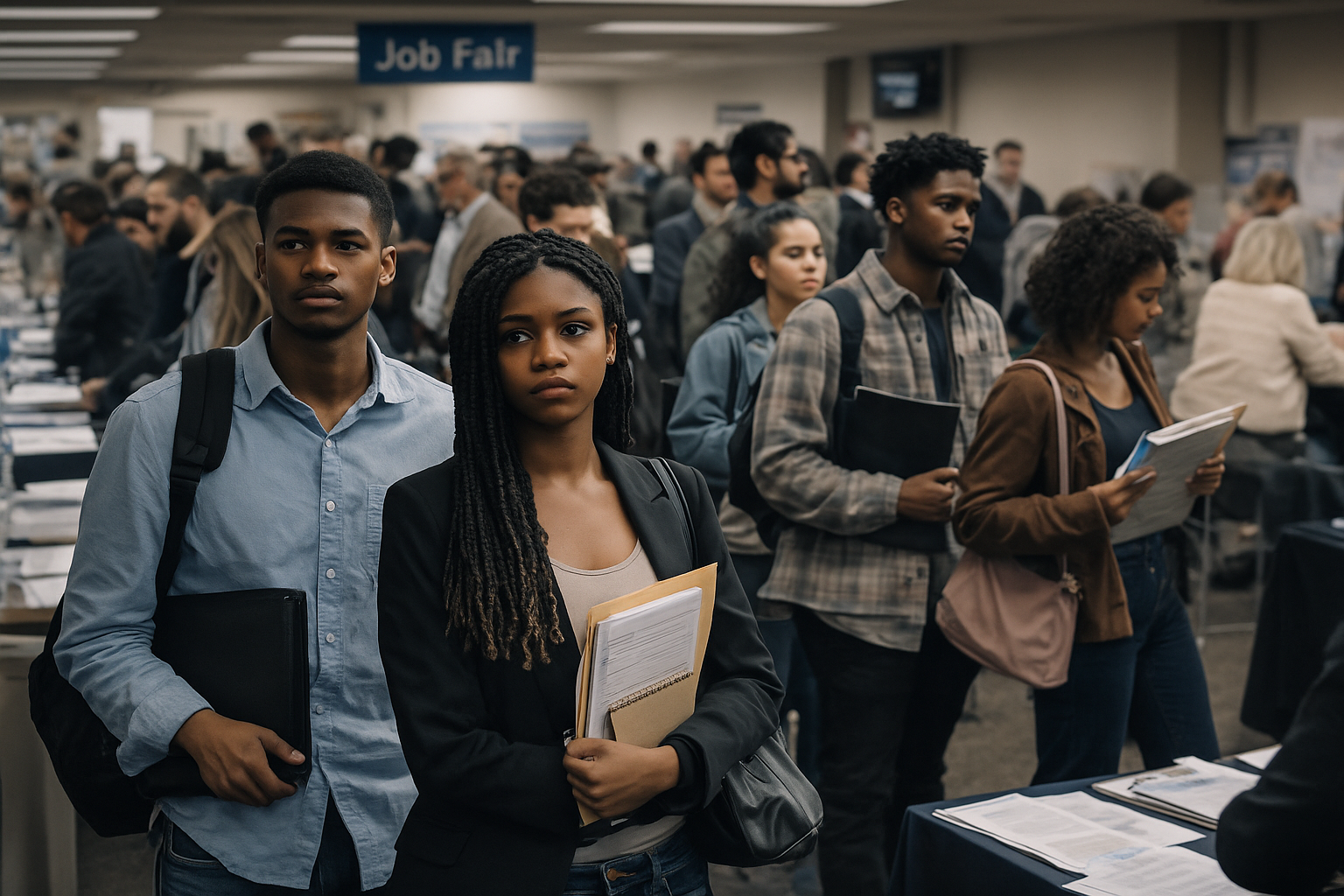
December 2025 job report shows rising unemployment across the U.S., with young workers and African Americans facing disproportionately high rates.
The U.S. unemployment rate has increased to 4.6% in December 2025, with particularly high unemployment rates among young people (16.3%) and African Americans (8.3%), according to the latest national labor report.
The U.S. unemployment rate rose to 4.6% in December 2025, marking a slight increase compared to previous months. The latest figures show that young people, particularly those aged 16 to 24, have been the hardest hit, with an unemployment rate of 16.3%. Additionally, the unemployment rate for African Americans stood at 8.3%, reflecting significant disparities in the labor market.
Economists are sounding alarms about the growing divergence in employment trends, as certain demographics are disproportionately impacted by rising joblessness. The youth unemployment rate is especially concerning, with many young workers facing challenges in securing stable, long-term employment opportunities.
African American workers also continue to face higher-than-average unemployment rates, a reflection of ongoing systemic barriers and disparities in access to job opportunities. Experts have pointed to a lack of targeted policies that address these challenges in the current labor market.
The national unemployment rate of 4.6% is still considered relatively low by historical standards, but the figures underscore growing economic inequality. The youth and African American job markets are showing signs of structural issues that may require new interventions from both government and private sectors.
Job seekers in the hardest-hit demographics are facing additional challenges, including limited job availability, wage stagnation, and barriers to entry-level employment. Many of these individuals are also facing difficulties in finding roles that match their skills and qualifications, leading to long-term economic instability.
Experts are calling for increased investments in workforce development, education, and training programs aimed at addressing the specific needs of young and minority workers. They also emphasize the need for policies that reduce employment disparities and create opportunities for economic mobility.